

Fluffing an artificial Christmas tree is the most important step in turning compressed branches into a lush, realistic centerpiece. Packed trees arrive flattened from shipping boxes, requiring careful branch shaping before you hang garlands or ornaments.
A standard six-foot tree typically requires 30 to 60 minutes of shaping to look balanced and full. Taking the time to adjust every layer eliminates hollow sections and effectively disguises the central metal pole.
Essential Tools and Preparation Before Fluffing
Before you begin shaping branches, clear an open perimeter in your room so you can walk around the tree freely. Check our tree size guides to ensure you have sufficient clearance from nearby furniture and light fixtures.
Consider wearing lightweight gardening gloves to protect your hands from scratchy needle materials during extended shaping. Setting up your sturdy metal stand on a flat surface first will prevent any wobbling while you pull and spread branches.
Step-by-Step Guide: How to Fluff a Christmas Tree
Following a methodical, bottom-to-top assembly process ensures that no inner branches are overlooked. Working section by section keeps the tree manageable and guarantees uniform density around the entire perimeter.
Step 1: Assemble the Bottom Section First
Insert the bottom pole section into the stand and tighten the retaining eyebolts until the trunk is completely plumb. Allow hinged branch arms to fall open naturally into their horizontal positions before moving on to individual branchlets.
Fluffing this base layer thoroughly before stacking higher sections gives you clear, unobstructed access to the deepest inner branches. It is far more difficult to reach base layers once the entire tree is fully assembled.
Step 2: Spread the Deep Inner Tips
Reach deep into the interior of each main branch near the center trunk. Separate the rear tips and angle them sideways and upwards in alternating directions to create an internal foliage wall.
These interior tips are primarily designed to block the view of the central metal pole and mechanical hinges. Creating a solid backdrop inside the tree makes the exterior tips appear considerably denser.
Step 3: Fan Out the Outer Tips
Move outward along each branch arm, spreading every smaller tip away from the main branch wire. Position individual tips in alternating angles, with one pointing left, one pointing right, and one pointing upward.
Give the outermost tips a slight upward curve toward the ceiling to mimic natural new growth on real evergreen boughs. Avoid leaving branch tips completely parallel to one another, which creates an artificial, stamped appearance.
Step 4: Stack and Shape the Remaining Sections
Insert the middle section into the lower trunk and repeat the thorough branch-spreading process. Work row by row around the circumference so that every side receives equal attention and density.
Finally, attach the top section and fan out its dense cluster of branches outward and upward. Ensure the central vertical leader tip is straightened securely to support your chosen holiday topper.
Understanding Foliage Types: PE vs. PVC Branches
How you handle branches depends heavily on whether your tree uses PVC, molded PE, or a combination of both. You can browse our wider Christmas Tree Buying Guides to understand how needle construction impacts seasonal maintenance.
Traditional PVC tips feature flexible, flat cut needles that fluff out quickly into broad fans to fill space. Molded polyethylene tips mimic real conifer needles with dimensional structure, requiring delicate positioning to showcase their realistic exterior profiles.
Fluffing Example: Treepool 6FT Unlit Artificial Christmas Tree
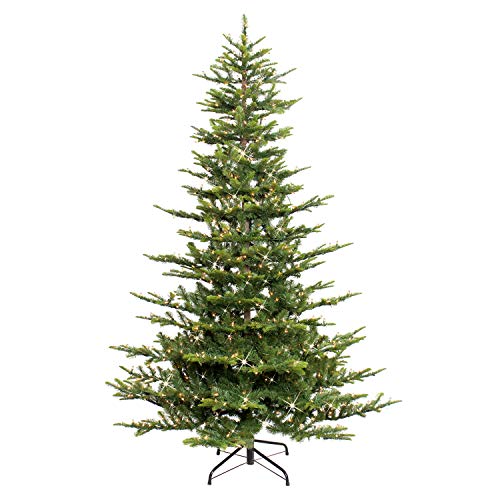
The Treepool 6FT Unlit Artificial Christmas Tree serves as a clear example of modern hinged branch construction. It features 1,720 branch tips made from a blend of PE and flame-retardant PVC needles, mounted on sturdy metal hinges.
According to the manufacturer, structural assembly of its three sections takes only 3 to 5 minutes, while fluffing requires approximately 30 to 60 minutes. That dedicated shaping time allows the dense tip count to expand into a lush, balanced silhouette suitable for living rooms.

Treepool 6ft Unlit Artificial Christmas Tree


As an Amazon Associate we earn from qualifying purchases. Product prices and availability are accurate as of the date/time indicated.
Because this model is unlit, you can shape every branch tip completely without worrying about snagging pre-strung light cords. If you prefer a design that does not require extensive fluffing, exploring sparse Christmas trees offers an intentionally open alternative.
Final Inspection: How to Spot and Fill Gaps
Once all sections are shaped, step back at least six to eight feet from the tree and inspect it from multiple angles. Look for obvious daylight holes where you can see directly through to the back wall or center trunk.
Nudge adjacent branch tips to bridge any remaining gaps instead of bending the heavy structural metal hinges. Adding ribbons, wide garlands, and decorative picks from our tree accessories collection will easily conceal any remaining sparse spots.
Frequently Asked Questions
How long should fluffing a Christmas tree take?
Fluffing time depends on tree height and overall branch density. A standard six-foot model with around 1,700 tips typically takes 30 to 60 minutes, while taller or denser luxury models can take up to two hours.
Do I fluff the tree before or after adding lights?
Always fluff your tree fully before stringing any unlit tree with holiday lights. Shaping the branches first gives you clear access to individual tips and prevents the light wires from tangling or pulling branches out of place.
Will my tree need fluffing again next year?
Yes, any tree compressed into a storage box or storage bag will require light reshuffling each holiday season. However, annual touch-ups usually take half the time of the initial out-of-the-box shaping.




Write Your Review
No reviews yet. Be the first to share your experience!