

The best fiber optic Christmas tree is a different kind of decoration from a traditional tree: the light show is built into the branches themselves, so it needs no separate light strings and no ornaments to look finished. The products below are compared from their listed specifications and documented features rather than hands-on testing, so stated limits remain part of each recommendation.
Fiber optic trees work by piping light from a source in the base through thin fibers to the tip of every branch. The result is a tree that glitters from within, often with color-changing effects, while staying cool to the touch and drawing very little power. They shine brightest, literally and figuratively, in dimmer rooms and as accent pieces: kids’ bedrooms, offices, entryways, and apartments where a full-size traditional tree will not fit. Check the product cards for current prices and availability, since both move through the season.
Top Products

Pros
- Built-in color-changing fiber optic lighting
- Includes 6.5-foot USB power cable
- Compact footprint fits desks and tabletops
- One-piece design requires minimal setup
- Sturdy four-point gold-tone pot base
Cons
- Requires a USB port or separate power adapter
- Limited to tabletop or small-space display

Pros
- Integrated fiber optic and RGB lighting
- Pre-attached tree topper star included
- Includes folding metal stand
- Low-voltage power adapter for safety
Cons
- Low branch density with only 170 tips
- Requires manual attachment of 24 snowflake covers
- Requires extensive shaping out of the box

Pros
- Compact 30-inch diameter fits tight floor spaces
- Pre-lit with 180 multicolor lights and fiber optics
- Eight selectable light patterns with push-button controls
- Includes sturdy 18-inch metal stand
- Bendable branches allow customized shaping

Pros
- Built-in colorful fiber optic lighting
- Slim 12-inch diameter fits tight areas
- Foldable metal base included
- Floor-protecting non-slip feet
Cons
- Low density with only 125 branch tips
- Limited branch capacity for heavy ornaments

Pros
- 300 warm white LEDs with eight lighting modes
- Built-in timer with automatic six-hour cycle
- Weighted cement urn base provides enhanced stability
- Strand remains illuminated if one bulb burns out
- Pliable PVC branches allow straightforward shaping
Cons
- Conflicting height details between 4.5 and 3 feet
- No built-in decorations beyond standard branch lights
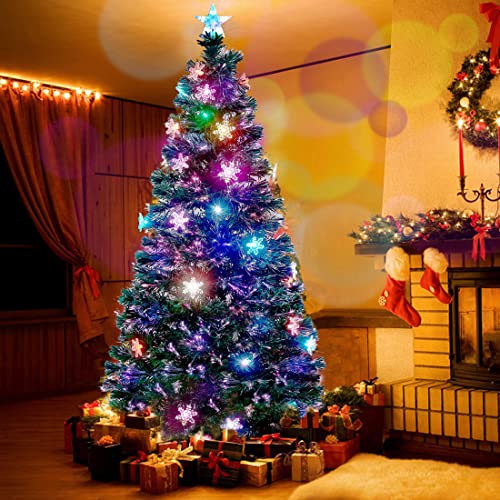
Pros
- Dual lighting with fiber optics and color-changing LEDs
- Pre-lit tree star and snowflake accents included
- Compact 37-inch footprint for smaller spaces
- Stable folding metal stand included
- Lightweight build at approximately 14 pounds
Cons
- Low foliage density with only 270 branch tips
- Requires manual installation of 48 individual snowflake pieces
- Requires extensive manual branch shaping out of box

Pros
- Multi-color fiber optic lighting with built-in top star
- Includes USB cable and standard wall power adapter
- Compact 24-inch footprint suitable for desks and tables
- Lightweight 1.5-pound build for effortless repositioning
- Sturdy square base provides stable tabletop support
Cons
- Sparse branch structure with only 55 total tips
- Compressed branches require manual shaping upon arrival

Pros
- Integrated fiber optic lighting with dynamic flashing modes
- Includes lighted top star and USB wall adapter
- Compact footprint fits counters, desks, and shelves
- Stable square base helps prevent tipping
Cons
- Low branch density with only 55 tips
- Compact two-foot height unsuitable for floor placement

Pros
- Integrated multicolor fiber optics and illuminated tree topper
- USB-powered design with included wall adapter
- Compact dimensions ideal for tabletop and desk spaces
- Lightweight two-piece construction simplifies seasonal storage
- Square base provides stable tabletop balance
Cons
- Low count of 85 branch tips provides sparse foliage
- Compressed packaging requires manual branch fluffing
- Lighting limited to pre-programmed automatic modes

Pros
- Integrated multicolor fiber optic lighting and top star
- Convenient inline on/off switch with included wall adapter
- Compact footprint designed for small spaces and tabletops
- Lightweight design simplifies seasonal handling and storage
- Four-legged base stand included
Cons
- Modest 141 branch tip count offers lighter density
- Relies on USB power cord and adapter setup
Fiber Optic Christmas Tree Buying Guide
How fiber optic trees actually work
A light engine, usually LEDs, sits in the tree’s base and feeds light into bundles of optical fiber woven through the branches. Each fiber ends at a branch tip, which is why the whole tree sparkles rather than glowing from wrapped strings. Most models cycle through colors automatically; many add steady-white modes, flashing patterns, or both. Because the fibers themselves carry no electricity and no heat, the branches stay cool even after hours of use, which makes these trees a genuinely safer pick for children’s rooms.
Size: think accent, not centerpiece
Fiber optic trees cluster at the small end: tabletop models around 2 feet (like the e crafty 24-inch trees above, including white and black finishes and one with a built-in illuminated top star) up to 4 to 7-foot floor models (like the Juegoal 5-foot and 7-foot trees and the Goplus 4-foot). The Nearly Natural 6-foot white fiber optic tree is the closest thing on our list to a traditional centerpiece, with a listed 30-inch diameter that fits tight floor spaces. Be realistic about presence: a fiber optic tree will not match the fullness of a PE-branch traditional tree, and it is not trying to.
Color-changing vs. steady white
Most fiber optic trees default to color-changing mode, which is the effect buyers picture when they shop this category. If you prefer a calmer look, check that the listing documents a steady-white or single-color mode before buying: not every model includes one. The Juegoal 7-foot tree above documents dual lighting with fiber optics plus color-changing LEDs, and the GarveeHome potted tree lists 300 warm white LEDs with eight lighting modes, giving you options beyond the rainbow cycle.
What to check before buying
First, fiber density: more fibers per branch means a denser sparkle rather than a few lonely points of light, so compare product photos at similar zoom and read the listing’s description of the fiber coverage. Second, the base: the light engine lives there, so a stable, well-weighted base matters more than on a traditional tree. Third, power: most models run on a low-voltage adapter, so confirm the cord length reaches your outlet and check whether a timer function is included. Fourth, the topper: several models on our list build the star or topper into the fiber system with its own illumination, which saves you buying one separately.
Care and lifespan
Fiber optic trees need almost no maintenance: no bulbs to replace, no strings to untangle. The parts that age are the LED light engine and the fibers themselves, which can dim or break if kinked. Store the tree without crushing the branches, keep the base dry, and handle the fibers gently during setup. When the light engine eventually fades after many seasons, that is the realistic end of the tree’s life, since the engine is rarely replaceable.
Fiber optic vs. a pre-lit LED tree
The choice comes down to what you want the tree to do. A pre-lit LED tree looks like a traditional Christmas tree with lights on it: full branches, ornaments, classic silhouette, and the lights are an accessory. A fiber optic tree looks like a light sculpture that happens to be tree-shaped: sparser branches, no need for ornaments, and the light effect is the entire point. Households that love decorating will be happier with a pre-lit tree they can dress up each year. Households that want to plug in one thing and be done, especially in a kid’s room or a small apartment, will be happier with fiber optic. Some families run both: a traditional tree in the living room and a fiber optic accent in the hallway or bedroom.
Frequently Asked Questions
Do fiber optic trees need ornaments?
Not really, and most owners skip them. The built-in light effect is the decoration. A few lightweight ornaments will not hurt, but heavy baubles can bend fibers and block the sparkle, so if you decorate, keep it minimal and light.
Are fiber optic trees safe for kids and pets?
They are among the safest options: the branches carry light, not electricity or heat, and the low-voltage base stays cool. The usual precautions still apply: keep the power adapter out of reach of chewing pets, and anchor taller models so an excited child or cat cannot topple them.
Can you leave a fiber optic tree on all day?
Yes. LEDs draw very little power and generate almost no heat, so all-day operation is exactly what these trees are built for. A timer, where included, makes it effortless. As with any electrical decoration, use a sound outlet and avoid damaged cords.
Why does my fiber optic tree look dimmer than in photos?
Product photos are taken in dark rooms with long exposures. In a brightly lit living room at noon, any fiber optic tree looks subtler. They earn their wow factor in the evening with the room lights low, which is also when most people actually look at their tree.
Prices and availability change through the holiday season, so use the product cards above for the current numbers. As an Amazon Associate, we earn from qualifying purchases made through links on this page.

